

Okay, can we talk about one of the biggest mysteries in Dark that doesn’t get nearly enough attention? What the hell happened to Agnes Nielsen between abandoning young Tronte in 1953 and showing up decades later as an old woman… also in 1953? Because that timeline doesn’t add up unless you factor in time travel, and honestly, the show gives us just enough breadcrumbs to theorize wildly about it.
TLDR

Agnes Nielsen abandons young Tronte in 1953 Winden and disappears for decades, only to resurface as an elderly woman in 1953 renting rooms to Doris Tiedemann. The article explores theories about her time-traveling activities, possible connection to Sic Mundus, her transformation from grieving mother to time manipulator, and whether she was orchestrating events all along or trapped in the cycle like everyone else.
Let me walk you through what we know and what I think really went down.
The Disappearing Act
Agnes shows up in Winden in 1953 with young Tronte, claiming she’s fleeing her abusive husband. She rents a room from Doris Tiedemann, settles in, and then… she just leaves. Tronte wakes up one day, and his mother is gone. No goodbye, no explanation. Just abandoned.
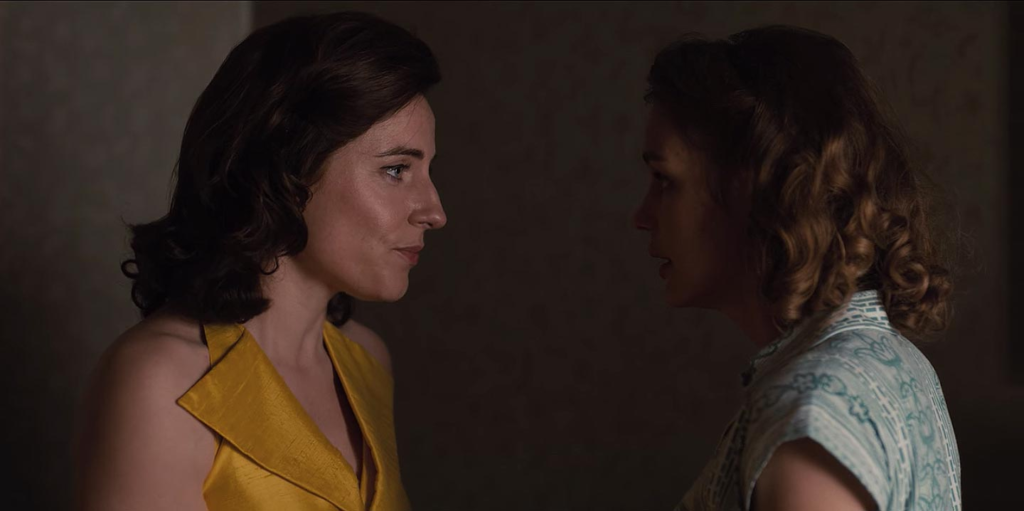
Here’s where it gets weird: Later in the series, we see an elderly Agnes in 1953 (yes, the same year) working with Claudia Tiedemann and seemingly involved with Sic Mundus. She’s not the traumatized refugee anymore. She’s calculating, purposeful, and clearly knows way more about the time loop than she ever let on.
Theory #1: She Was Recruited by Sic Mundus
My primary theory? Agnes didn’t just disappear. She was recruited. Think about it: Adam (Jonas) needs people strategically placed throughout time to maintain the knot. Agnes arrives in 1953 with insider knowledge about the cycle because she’s already lived through multiple iterations.
After leaving Tronte, I believe she traveled forward in time, possibly to the 1980s or 2019, where she connected with Adam and learned the full scope of what was happening. She became an agent of Sic Mundus, understanding that her son Tronte needed to stay in 1953 to eventually father Regina Tiedemann (through his affair with Claudia). She couldn’t raise him because that would interfere with the predetermined chain of events.
So she abandoned him. Not out of cruelty, but because the cycle demanded it.
Theory #2: She Was Searching for the Unknown
Remember, Agnes’s husband was one-third of the Unknown, the origin entity that exists outside normal time. She mentions he was violent, but what if there’s more to that story? What if she spent those missing years trying to understand or stop the Unknown, realizing too late that he was her own grandson caught in a paradox?
The guilt and horror of that realization could explain why elderly Agnes seems so resigned and exhausted when we see her again. She’s not just tired from time travel. She’s carrying the weight of knowing her family tree is an impossible ouroboros.
Theory #3: She Created Her Own Loop
Here’s a darker possibility: What if Agnes chose to become part of the machinery? When she first arrived in 1953, she might have been genuinely fleeing. But after experiencing the future and understanding the inevitability of the cycle, she made the calculated decision to ensure it continued.
Maybe she traveled to different time periods, strategically placing pieces of the puzzle. We know she gives Noah the final pages of the Triquetra diary. That’s not random. That’s orchestration. She’s not a victim of the loop; she’s a co-author.
The Emotional Devastation
What kills me about Agnes’s story is the emotional cost. Whether she was manipulated or complicit, she had to abandon her child. Twice, actually. First as a mother leaving young Tronte, then as an older woman watching him grow up from the shadows, unable to intervene.
She loses her husband to violence (or paradox), her son to necessity, and her daughter-in-law (Claudia) becomes her rival in the time war. Agnes doesn’t get a redemption arc or a happy ending. She’s just… used up by the cycle and discarded.
The Lingering Questions
What was Agnes doing between 1953 and whenever she aged into the elderly woman we see? Was she living linearly somewhere, or was she jumping through time? Did she have any moments of happiness, or was it all just servitude to the loop?
And here’s the big one: Did Agnes know Regina was her granddaughter? Did she watch Claudia raise the child her son fathered, knowing the full tragic irony of their family connections?
Dark never gives us these answers, which is both frustrating and brilliant. Agnes remains enigmatic. A woman who chose (or was forced) to sacrifice everything for a cycle she couldn’t escape. She’s simultaneously perpetrator and victim, architect and pawn.
Check out My Fan Theories for all the fan theories / fandom about Netflix movies and series.