

Okay, let’s talk about one of the most frustrating aspects of the final battle in Demon Slayer: Muzan Kibutsuji, the most powerful demon in existence, had SO many chances to kill Tanjiro Kamado, and he just… didn’t. And I’ve been obsessed with figuring out why.
At first glance, it seems like plot armor, right? The protagonist needs to survive, so the villain conveniently holds back. But the more I’ve rewatched and thought about it, the more I realize there’s actually a brilliant character study happening here. Muzan’s inability to kill Tanjiro reveals everything wrong with him as both a fighter and a being.
TLDR

Muzan's failure to kill Tanjiro stems from a combination of factors: underestimating the Kamado bloodline's connection to Yoriichi, tactical arrogance prioritizing his own survival over finishing off enemies, Tanjiro's extraordinary resilience and support system, and ultimately, Muzan's mounting desperation as the sun approached—turning his overwhelming power into scattered, unfocused attacks.
The Yoriichi Trauma Theory
Here’s what I think is the core issue: Muzan is absolutely terrified of anything connected to Yoriichi Tsugikuni. We’re talking about centuries-old PTSD. That one encounter with Yoriichi didn’t just nearly kill him—it psychologically broke him. Yoriichi was the only person who ever made Muzan feel genuinely powerless.
When Muzan sees Tanjiro wearing those hanafuda earrings and using Sun Breathing techniques, he doesn’t see a teenage boy. He sees a ghost. Every time Tanjiro uses Hinokami Kagura, Muzan’s fighting instinct wars with his trauma response. Part of him wants to obliterate this reminder of his greatest fear, but another part is genuinely rattled. That hesitation, that fraction of a second where he’s processing his trauma instead of attacking? That’s all Tanjiro needs to survive another exchange.
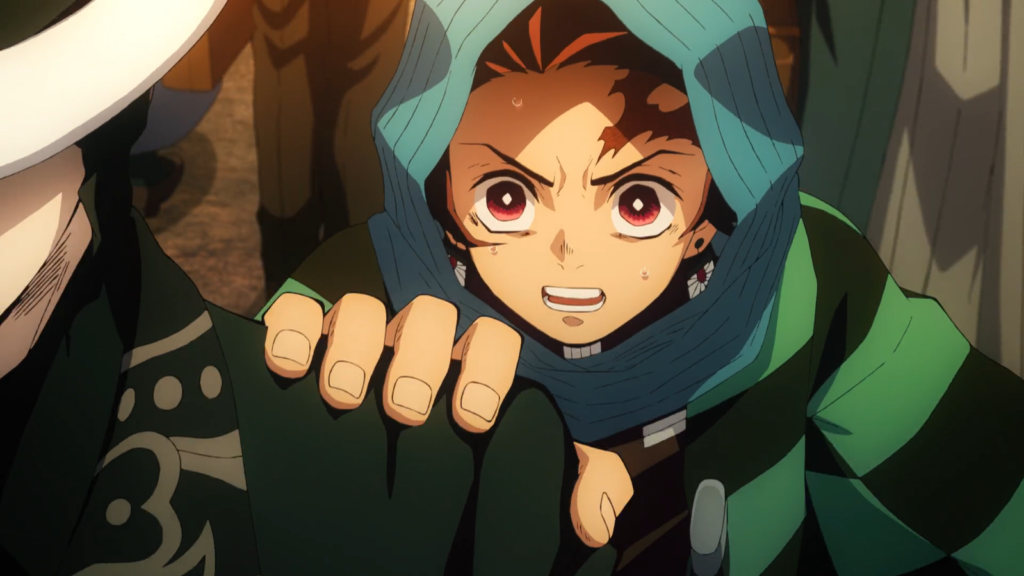
The Arrogance Factor
But let’s be real—Muzan is also stupidly arrogant. He’s spent a thousand years being the apex predator, and that’s made him tactically sloppy. He doesn’t fight to win; he fights to dominate. There’s a difference.
Throughout the final battle, Muzan keeps going for flashy, devastating attacks instead of simple, efficient kills. He’s got Tanjiro on the ropes multiple times, but instead of a quick finishing blow, he monologues, he toys with him, he tries to break him psychologically. It’s the classic villain mistake, except it’s deeply rooted in Muzan’s character. He needs his victims to know they’re beaten. He needs them to despair. A quick death doesn’t satisfy his ego.
The Desperation Spiral
Here’s where it gets really interesting: as the battle progresses and the sun starts approaching, Muzan becomes increasingly desperate. And desperate Muzan is actually less effective than calm Muzan. His attacks become more chaotic, more panicked. He’s no longer fighting to kill Tanjiro—he’s fighting to survive until he can escape or find shelter.
The irony is beautiful. Muzan’s overwhelming power becomes his weakness because he can’t focus it properly. He’s lashing out at everyone—Tanjiro, the Hashira, anyone in his path—but he’s not strategically eliminating threats. He’s just trying to create space to run. Tanjiro survives not because Muzan can’t kill him, but because killing Tanjiro stops being Muzan’s primary objective.
Tanjiro’s Ungodly Plot Armor (That Actually Makes Sense)
Now, I won’t pretend Tanjiro doesn’t have serious protagonist energy working in his favor. The kid survives injuries that should absolutely be fatal—multiple times. But here’s the thing: the story establishes why. His ridiculous recovery ability, his willpower that borders on supernatural, his technique that directly counters demon abilities—these aren’t accidents.
Plus, Tanjiro is never really alone. Every time Muzan gets close to landing a killing blow, someone intervenes. Giyu, Inosuke, Kanao, the other Hashira—they’re constantly disrupting Muzan’s attacks. Muzan is fighting a war on multiple fronts, and Tanjiro benefits from collective protection. It’s not just about individual strength; it’s about the Demon Slayer Corps fighting as a unit.
The Thematic Reason
Here’s my favorite interpretation, though: Muzan can’t kill Tanjiro because everything Muzan represents is antithetical to everything that keeps Tanjiro alive. Muzan is selfish, isolated, motivated purely by self-preservation. Tanjiro is selfless, supported by bonds, motivated by protecting others.
The narrative suggests that Muzan’s philosophy is fundamentally weaker than Tanjiro’s. Every time Muzan should win through sheer power, Tanjiro’s bonds—his memories of his family, his promises to his friends, the support of his comrades—pull him back from the brink. Muzan can destroy Tanjiro’s body, but he can’t destroy what actually keeps Tanjiro fighting.
The Final Analysis
Muzan’s failure to kill Tanjiro isn’t a plot hole—it’s a character statement. His trauma makes him hesitate, his arrogance makes him inefficient, his desperation makes him sloppy, and his fundamental isolation means he can’t understand or counter the power of human connection that keeps Tanjiro alive.
In the end, the strongest demon in history is defeated not because he lacked power, but because he lacked everything else that actually matters. And that’s why, despite countless opportunities, he could never finish off one determined kid with a checkered haori.
Check out My Fan Theories for all the fan theories / fandom about Netflix movies and series.