
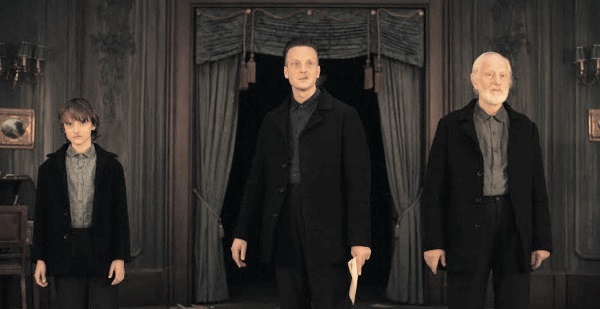
If you want to understand just how dark Dark gets, look no further than the Unknown trio. Three versions of the same person (child, adult, elderly) traveling together through time, ritualistically garroting people to death while never speaking a word. It’s haunting, it’s brutal, and honestly? It’s one of the most chilling aspects of the entire series.
TLDR

The Unknown trio (Jonas and Martha's son in three ages) killed specific people to maintain the knot and ensure the cycle continued. Bernd Doppler was murdered for the power plant master key, Jasmin Trewen was silenced for witnessing the theft of crucial plant data, and Gustav Tannhaus was killed to prevent him from exposing time travel to the world. Each murder served Eva's purpose of preserving the loop, with the Unknown acting as her enforcer across timelines.
But here’s the thing that kept me up at night: These weren’t random murders. Every single person the Unknown killed served a very specific purpose in maintaining the knot. Let me break down exactly who they killed and why.
The Victims and Their Purpose
Bernd Doppler (September 21, 1987)
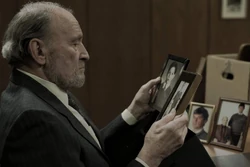
The Unknown’s first major kill that we see is Bernd Doppler, the former director of the Winden Nuclear Power Plant. The trio breaks into his palatial home, and when the child version demands the master key to the plant, Bernd tries to call the police. Big mistake. The adult Unknown pulls out his signature garrote and strangles Bernd to death in his wheelchair while saying “nothing is in vain.”
Why Bernd? Because Eva needs that master key. The Unknown uses it to access the power plant and trigger the incident that causes the apocalypse in both worlds. Without Bernd’s key, the knot potentially unravels. So Bernd had to die.
Jasmin Trewen (September 22, 1987)
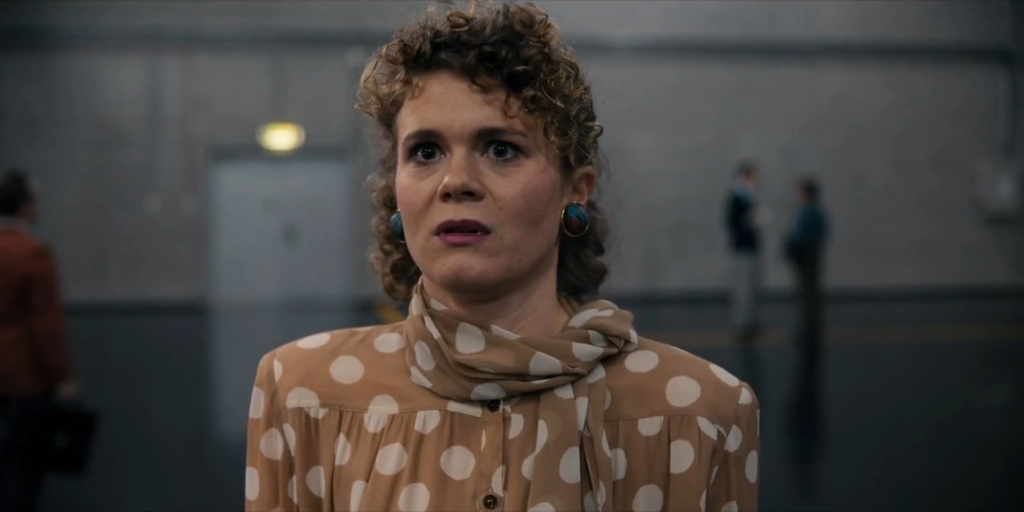
The very next night, the Unknown breaks into the power plant and rifles through Claudia Tiedemann’s files, looking for data from the volume control system. Jasmin Trewen, Claudia’s secretary, catches him in the act. She’s in the wrong place at the wrong time.
She’s silenced immediately. Not because she’s important to the timeline, but because she witnessed something she shouldn’t have. If she alerts security or tells Claudia what she saw, it could interfere with Eva’s plans. Jasmin’s death feels unnecessarily brutal, but that’s the point. The Unknown doesn’t hesitate, doesn’t negotiate. He eliminates threats to the cycle without emotion.
Gustav Tannhaus (September 23, 1888)
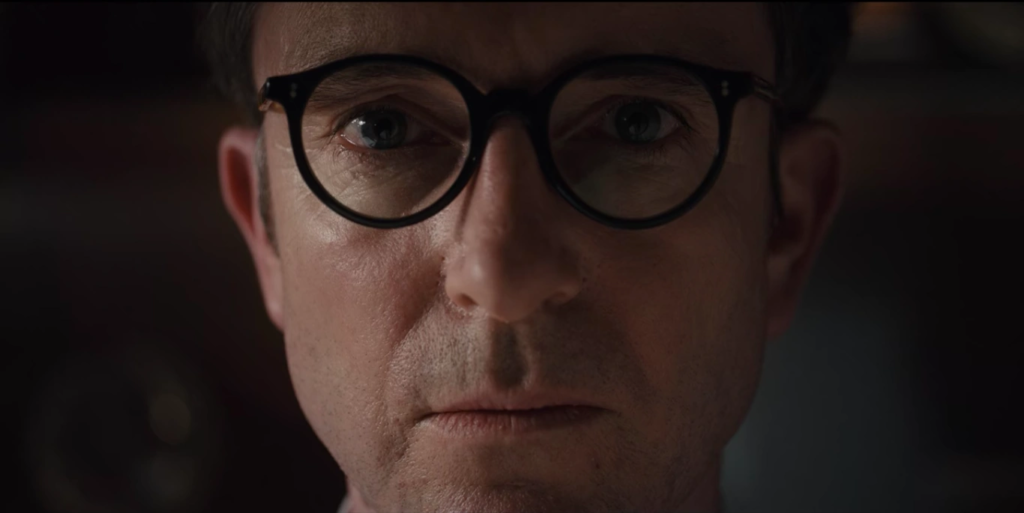
This is probably the most strategic kill. Gustav Tannhaus, grandfather of H.G. Tannhaus, has somehow learned about time travelers. We see him as an old man in 1888, riding in his carriage with his father’s pocket watch and the book Ariadne. He’s planning to go to town and send a telegram to the world, exposing the existence of time travel.
The Unknown stops his carriage, stabs the coachman, and enters. He tells Gustav he knows exactly what he’s planning, then pulls out the garrote and strangles him while saying “what we know is a drop, what we don’t know is an ocean” (a callback to Bernd’s own words to Claudia).
Why kill Gustav? Because if the world learns about time travel in 1888, it fundamentally changes history. Scientists, governments, everyone would be searching for the technology. The timeline as Eva knows it can’t exist if Gustav sends that telegram. Plus, the Unknown takes Gustav’s pocket watch (which has CHARLOTTE engraved on it), ensuring it eventually ends up in the right hands to maintain the loop.
The Ritualistic Pattern
What freaks me out most is the ritualistic nature of these murders. It’s always the same: the child and elderly versions stand watching while the middle-aged Unknown does the actual killing with a garrote. It’s methodical, ceremonial almost. Like they’re performing a necessary rite rather than committing murder.
The Unknown never speaks during these kills. The adult version might say a cryptic phrase (“nothing is in vain,” “an everlasting miracle of oneness”), but mostly they’re silent. Cold. Efficient. It’s like watching death itself moving through time, inevitable and unstoppable.
Working for Eva
Make no mistake, the Unknown isn’t acting on his own desires. He’s Eva’s enforcer, her agent across time. While Adam tries to destroy the knot by killing Martha and their unborn child, Eva ensures the knot survives by sending the Unknown to eliminate anyone who threatens it.
It’s fascinating and horrifying that Eva sends her own son on these murder missions. She knows he’ll exist in three simultaneous ages, making him the perfect time-traveling assassin. He can be in multiple places, multiple times, always watching, always ready to preserve the cycle.
And here’s the really messed up part: The Unknown is also Tronte Nielsen’s father (through Agnes). So when he’s killing Bernd and manipulating events at the power plant, he’s ensuring his own grandson’s existence. The family tree is so twisted that the Unknown is literally murdering people to preserve the bloodline that leads to his own creation.
The Unknown as the Knot’s Immune System
I’ve started thinking of the Unknown as the knot’s immune system. When something threatens to break the cycle, he appears and eliminates it. Bernd won’t give up the key? Eliminated. Jasmin sees too much? Eliminated. Gustav wants to expose everything? Eliminated.
He’s not evil in the traditional sense. He’s not killing for pleasure or revenge. He’s killing because the loop demands it. He’s a product of the knot, serving the knot, ensuring the knot continues. It’s determinism taken to its most brutal extreme.
The Emotional Weight
What gets me is that this is Jonas and Martha’s son. The child conceived in a moment of connection between two traumatized teenagers becomes this silent, murderous force. He never experiences normal life, never has a childhood that isn’t about serving the cycle.
The split lip he’s born with (a cleft palate) marks him as wrong, unnatural. He’s the physical manifestation of a paradox, and his entire existence is dedicated to maintaining the impossible loop that created him.
The Unanswered Questions
We never learn what the Unknown thinks or feels about his mission. Does he understand what he’s doing? Does he resent his mother for using him this way? Or is he so deeply embedded in the cycle that he can’t conceive of any other existence?
And what about the three ages traveling together? How does that work psychologically? Your child self and elderly self are always with you, watching every decision. That’s either the ultimate form of self-awareness or the most nightmarish existence imaginable.
Check out My Fan Theories for all the fan theories / fandom about Netflix movies and series.